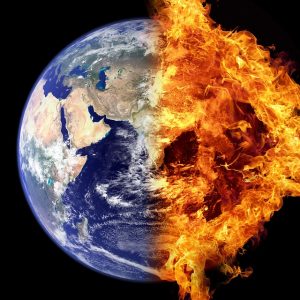
 The future is the time beyond the present; it is always present. Therefore, every thought is directed towards the future; the beginning of every action is a step towards the future; there is no static lingering in the present. Even all conservative theories – the traditional dogmas of an eternally unchanging existence – must be regarded as subject to change, and their usefulness, which depends on the dynamic changes of time, should always be critically assessed.
Yet the past, too, provides the framework for the future; it shapes the facts from which the future develops – anew at every moment and irrevocably. Whilst time may be shaped by individual perception, physical time is the decisive factor in the general course of events; it moves ceaselessly from the present towards the future. In this passage of time, a future takes shape, dependent on the past, yet with immense possibilities for shaping it into something useful, better or even worse.
But what does the future hold at the start of the 21st century, viewed from a pessimistic or sober perspective, apart from the grim risks of the failure of political systems, the erosion of civil liberties and human rights, the ongoing destruction of nature and – as an apocalyptic scenario – catastrophic military conflicts? The tightrope along which humanity is moving into the future is becoming ever narrower and more fragile, with chasms that allow for no slips or stumbles. Humanity is not moving along this tightrope harmoniously, but rather without a strong sense of responsibility, so that a stumble caused by arrogance or stupidity – even if it originates from only a few – could trigger an apocalypse for the whole of humanity.
Viewed objectively, these are the defining conditions under which life will unfold, both today and in the future. Yet a sustainable existence requires more than bleak forecasts for its development; it needs motivating, inspiring prospects. These, however, are by no means to be found in the consumer-oriented ideologies of affluent societies. Rather, these resemble graveyards for human virtues such as reason, ethics and humanity. Even in the thought patterns of today’s humanity, altruistic virtues are rather rare; people think and act primarily in an egocentric manner. Deviations from this norm are usually tied to the immediacy of a specific event and quickly give way once more to the satisfaction of one’s own everyday needs.
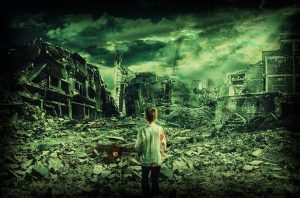
These patterns of behavior are only revised under the pressure of catastrophic events – events which, however, must first be experienced first-hand in a painful manner in order to bring about a lasting change in deeply ingrained patterns of thought. Media reports on such events, which lie beyond tangible experience, are consumed like any other form of superficial entertainment that makes the boredom of the moment bearable. A grim conclusion which, in all likelihood and based on all experience, suggests that only the destruction of the status quo can pave the way for lasting renewal. The fatal aspect of this assessment is the fact that the status quo, represented by the current state of development, is both the best and the worst that humanity has ever created; as such, it is at the mercy of apocalyptic destruction and will lead to the total collapse of civilisation. It is highly doubtful whether, from such a bleak fiasco for humanity – and, not to be forgotten, for the natural world that sustains it – any renewal at all is possible in the sense of an improvement on current conditions and their actual shortcomings. It is more likely that the opposite will occur: An all-encompassing downward spiral, the likes of which human history has never witnessed, will lead people into a state whose visual and emotional reality the minds of today’s population are apparently incapable of imagining.
Is the majority of humanity really so foolish and simple-minded that it ignores all the risks of its way of life – risks that are obvious even to an observer with only a latent capacity for reason? That they continue down a path which must inevitably lead to the darkest times imaginable, rather than seizing the opportunity that still exists and beginning to remedy the shortcomings of the status quo? To recognise that they are more than mere biological, chemical functional units with primitive needs, focused exclusively on maintaining functionality? Are human brains in
 Klaus Schneider November 2026

 Frieden auf Erden könnte es geben, theoretisch.